

What are dental veneers?
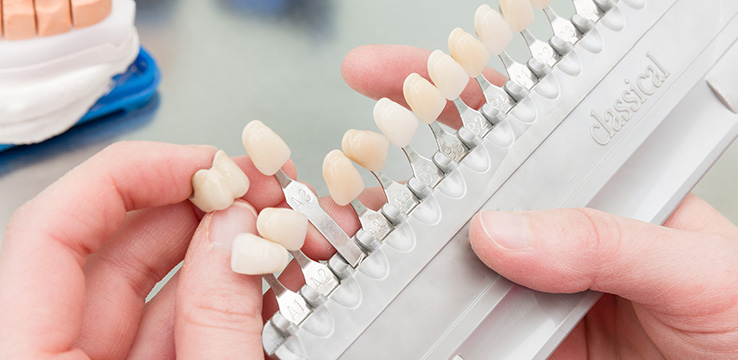
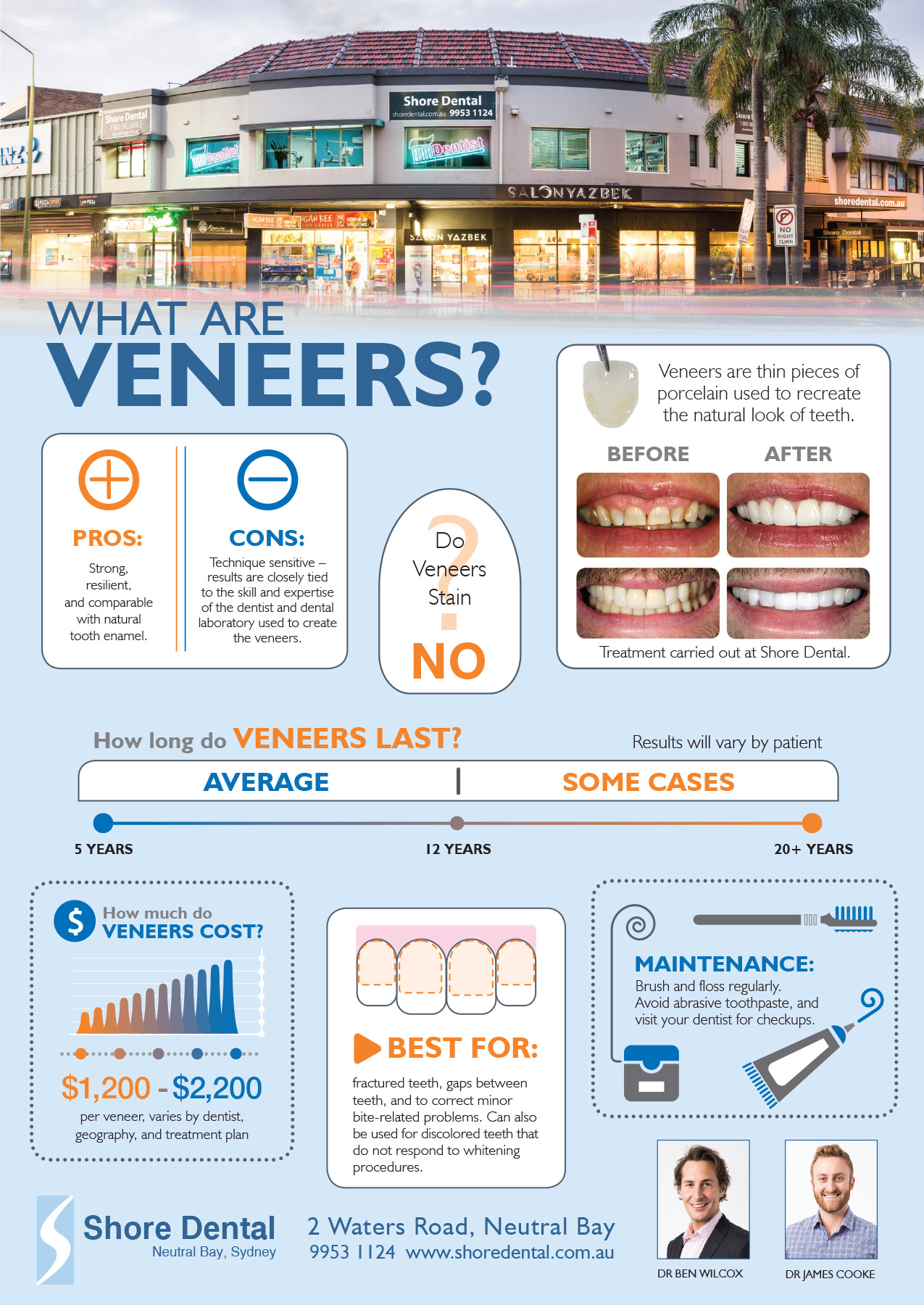
Dental veneers are thin, custom-made shells that are made from tooth-coloured materials – such as porcelain – which are designed to cover the front side of your teeth. In order to prepare for dental veneers, your dentist will create a unique model of your teeth, which is sent to a dental technician who will make your veneers. Before bonding the veneer to your teeth, your dentist may need to prepare your teeth in order to achieve the desired aesthetic result.

What are dental veneers made of?
Dental veneers can be made from porcelain or from resin composite materials. Porcelain veneers are better at resisting staining than resin veneers, and are better at mimicking the light-reflecting properties of natural teeth. However, resin dental veneers are thinner than porcelain, thus requiring removal of less of the tooth surface before being placed. Speak to your dentist to figure out what is the best choice of veneer material for you.
Porcelain Veneers
Composite Veneers
What does a dental veneers procedure involve?
The process of having dental veneers applied to your teeth will generally require about three trips to the dentist – one for a consultation, then two to make and apply the veneers.
Your first trip to the dentist will be the diagnosis and treatment-planning stage, which involves your active participation – be vocal with the results that you are trying to achieve with dental veneers. Your dentist will look at your teeth to make sure that dental veneers are the appropriate mode of treatment, and then discuss price, what the procedure will involve and its possible limitations.
In the next stage, your dentist will remove around half a millimeter of enamel from the tooth surface in order to prepare the tooth for a dental veneer. This thickness is an amount that is nearly equal to the thickness of the veneer to be added. You and your dentist may make a decision to use local anaesthetic to numb the area. After the tooth has been trimmed, your dentist will make a model or impression of your tooth to send to the dental technician to construct the veneer. In some vases, temporary dental veneers may be placed on your tooth.
In your last visit to the dentist, your tooth will be cleaned, polished and etched (in order to allow for a stronger bonding process). Special cement is then applied to the veneer, which is then placed on your tooth. Once the tooth is properly positioned, a blue light beam will be used to speed up the drying process. Finally, the dentist will remove any excess cement, evaluate your bite and make any final adjustments to the veneer if necessary.
Advantages of dental veneers
 Having a natural tooth appearance
 Porcelain is tolerated well by gum tissue
 Porcelain veneers are generally stain-resistance
 It is easy to colour-match porcelain veneers to be similar to your natural tooth colour
 Veneers generally don't require the extensive shaping prior to the procedure that crowns do
Disadvantages of porcelain dental veneers
 The procedure of getting porcelain veneers is not reversible
 As there is some enamel that is removed, the tooth underneath the veneer may become more sensitive to hot and cold foods and drinks
 Individuals with bruxism may be poor candidates for porcelain dental veneers, as these activities may cause them to crack or chip
Individuals with unhealthy teeth (such as decay or active gum disease) and/or weakened teeth (as a result of decay, fracture, large dental fillings) or who have an inadequate amount of existing enamel on the tooth surface may be poor candidates for porcelain dental veneers, as their condition may worsen underneath the veneer without the patient noticing.
How much do veneers cost?
Porcelain veneer (single) $1800-$2,400
If multiple veneers are required at the same time a reduction in the total combined quote cost may apply.
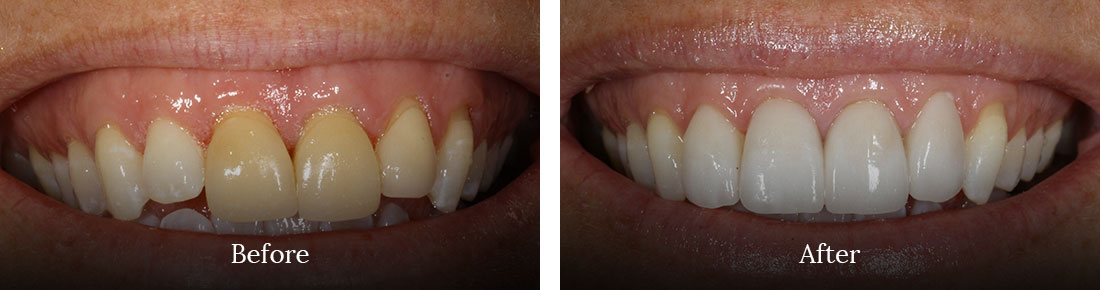
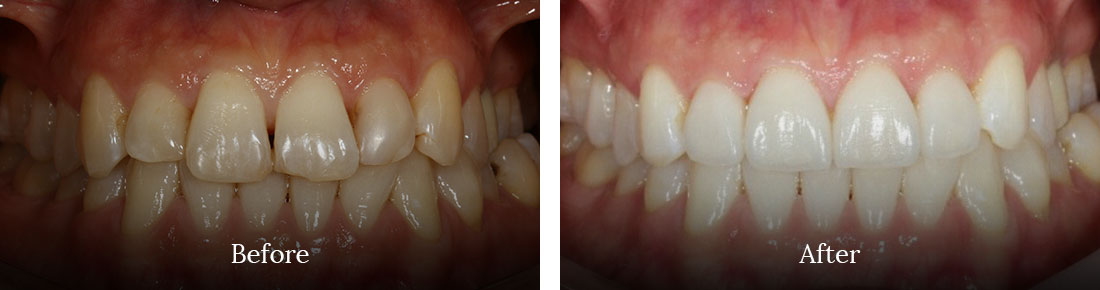
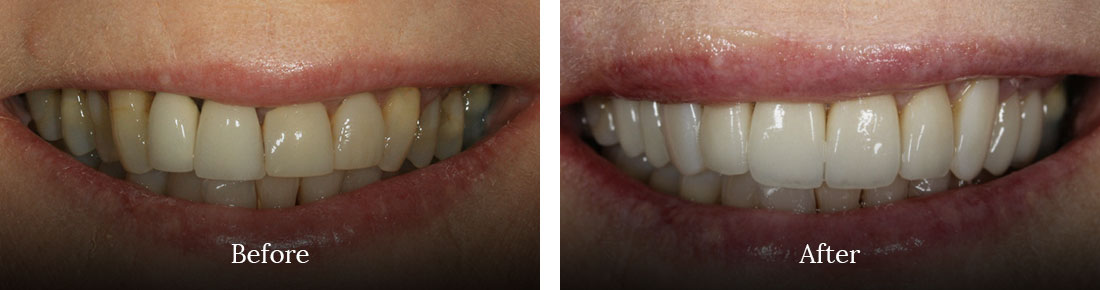
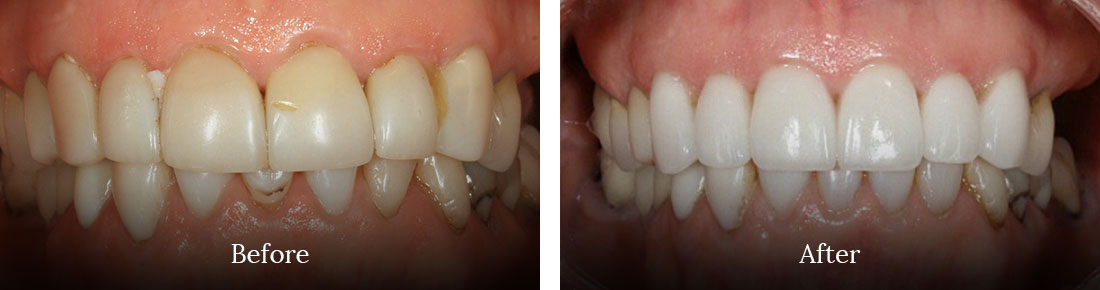
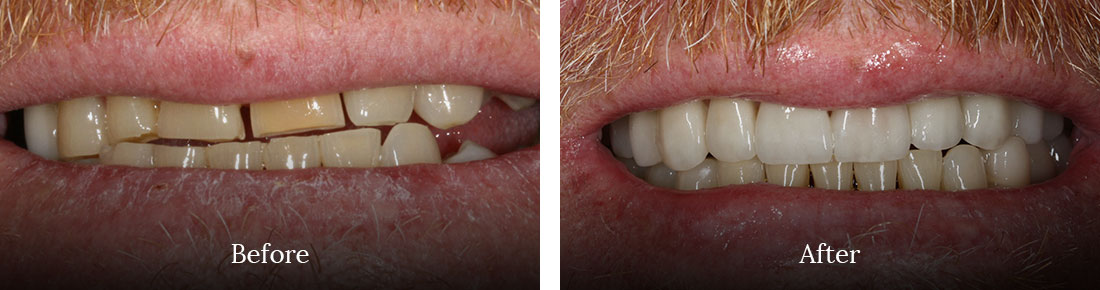
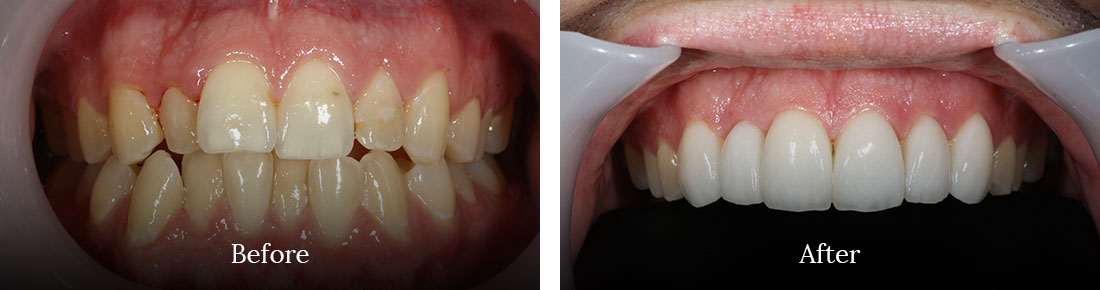
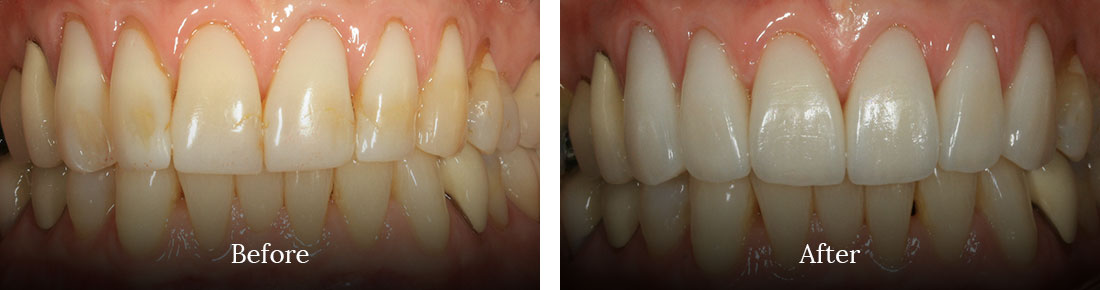
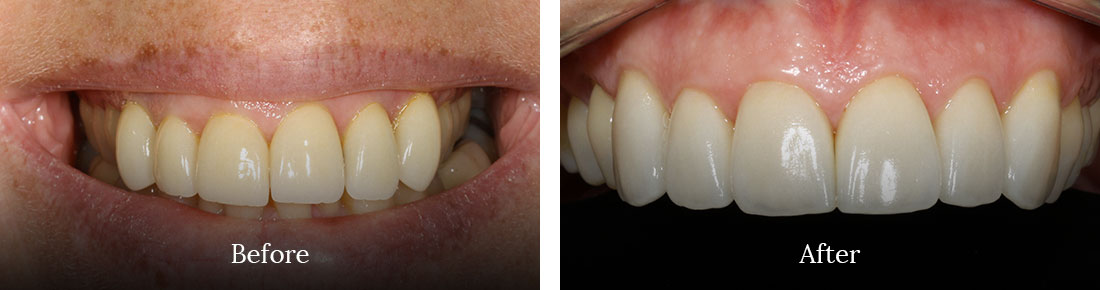
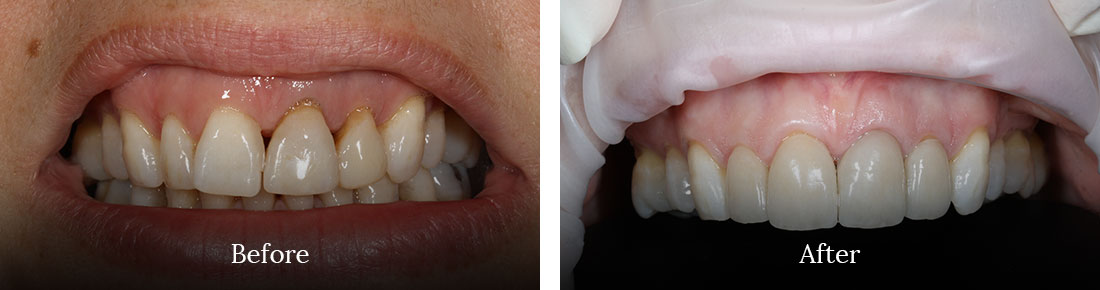
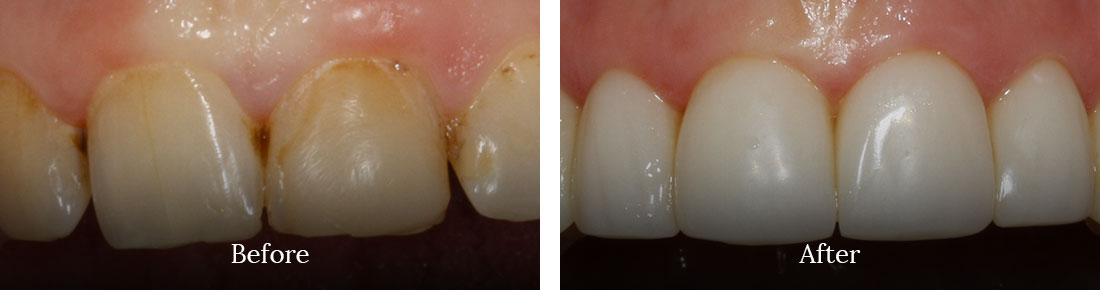
Veneers Patient Case Studies
These case studies are all Shore Dental patients. The work has been completed by Dr Ben Wilcox or Dr James Cooke at the Shore Dental practice. See more in our Smile Gallery.